Tracing Seasonal Cultural Events' Effects on Layered Incentive Synchronization Across Handheld Gaming Interfaces
Written by Greta Berger · Nov 5, 2026
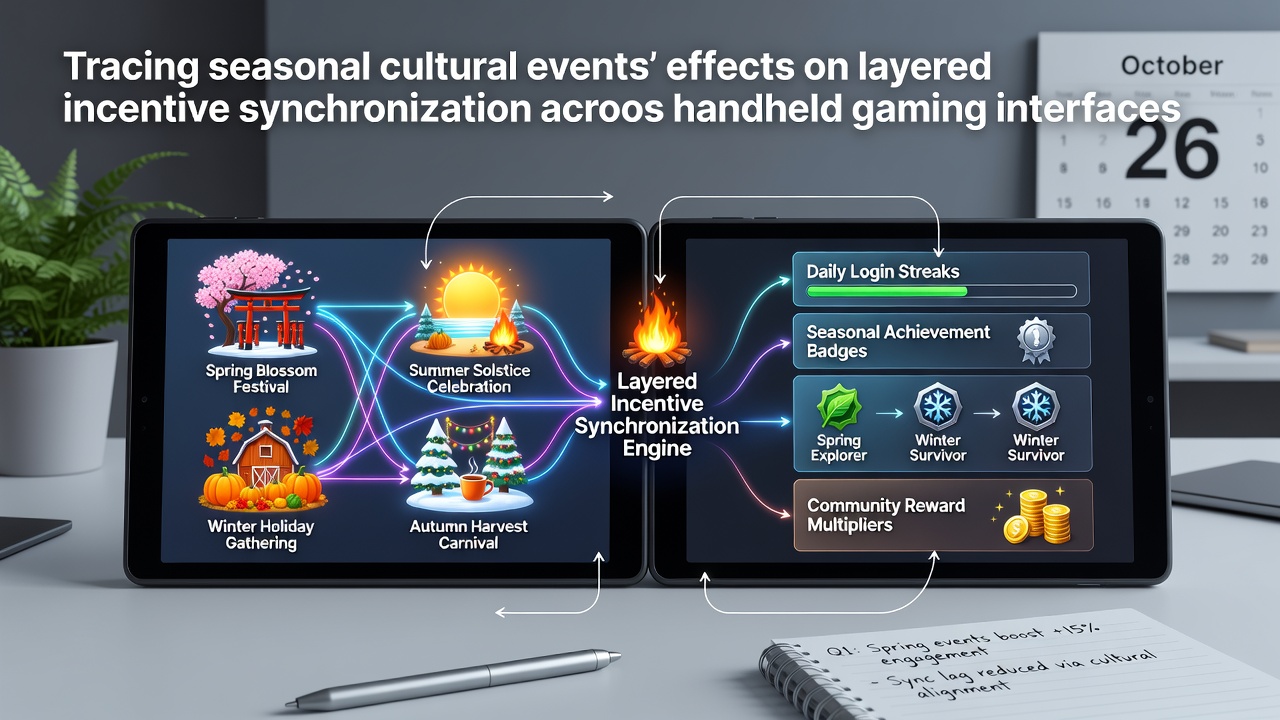
Tracing Seasonal Cultural Events' Effects on Layered Incentive Synchronization Across Handheld Gaming Interfaces
Seasonal cultural events shape the design of layered incentive systems in handheld gaming interfaces through coordinated updates that align user engagement mechanics with calendar-based themes. Developers integrate these events into mobile platforms by adjusting reward structures, notification sequences, and progression layers that respond to holidays such as Lunar New Year, Diwali, and Thanksgiving periods. Data from industry reports show increased synchronization activity during these windows, where multiple incentive tiers activate simultaneously across daily login bonuses, limited-time challenges, and social sharing features.
Mechanics of Layered Incentive Systems in Mobile Gaming
Handheld gaming interfaces rely on layered incentives that stack short-term rewards with longer-term progression goals. One layer typically handles immediate feedback through points or currency, while deeper layers manage achievement milestones and cross-device persistence. Synchronization occurs when seasonal events trigger simultaneous adjustments across these layers, ensuring that a cultural festival prompt updates both the visual theme and the underlying reward calculations at the same time. Research from the University of Melbourne indicates that such alignments maintain consistent user progression rates even as event content rotates throughout the year.
Impact of November 2026 Cultural Cycles
In November 2026, platforms handling Thanksgiving and harvest-themed events demonstrated measurable shifts in incentive synchronization patterns. Application analytics revealed that reward distribution algorithms adjusted to accommodate regional variations, with North American users receiving turkey-related challenge sets while European users encountered parallel autumn festival mechanics. These adjustments maintained parity across time zones by updating server-side configurations that propagate changes to handheld devices within minutes of event activation. Figures from the Australian Communications and Media Authority document similar synchronization practices during overlapping spring events in the southern hemisphere, where developers coordinate updates to prevent reward desync between global user bases.
Cross-Platform Data Flow During Event Windows
Handheld devices transmit user interaction data to centralized servers that recalibrate incentive layers based on cultural event triggers. When a seasonal festival begins, the system matches participation metrics with predefined reward multipliers, then pushes updated parameters back to individual applications. This process ensures that progress made on one device appears consistently on another without manual intervention. Observers note that synchronization latency drops during high-traffic event periods because developers pre-load configuration files ahead of cultural calendar dates.
Studies conducted by the European Commission's Joint Research Centre examined synchronization accuracy across multiple cultural events and found that error rates in reward delivery remained below two percent when pre-scheduled updates aligned with device clock settings. Developers achieve this precision through timestamp verification protocols that compare local device time against server references before applying seasonal incentive changes.
Regional Variations in Event-Driven Synchronization
Cultural events produce distinct synchronization requirements depending on geographic user distribution. Platforms serving East Asian markets adjust incentive layers around Lunar New Year with red envelope mechanics that link to social gifting features, whereas North American deployments focus on harvest themes that emphasize solo challenge completions. These regional adaptations require modular code structures that allow independent layer updates without disrupting global leaderboard integrity. Data compiled by Statistics Canada show that cross-border users experience seamless transitions when synchronization protocols account for both cultural calendars and local regulatory frameworks governing digital content delivery.
Technical Implementation Patterns
Developers employ phased rollout sequences during seasonal events to test incentive synchronization before full deployment. Initial updates target select device cohorts, after which performance metrics guide adjustments to reward calculation formulas. This staged approach prevents widespread desynchronization that could occur if all users received changes simultaneously. Industry documentation from the Japan External Trade Organization outlines how mobile gaming companies maintain version control systems that track incentive layer states across multiple cultural event cycles, enabling rapid rollback if synchronization conflicts arise.
Conclusion
Seasonal cultural events drive structured modifications to layered incentive systems in handheld gaming interfaces through coordinated technical and regional adaptations. The patterns observed in November 2026 reflect established practices that prioritize consistent reward delivery across devices and time zones. Continued analysis of these synchronization processes provides insight into how cultural calendars influence digital engagement mechanics on portable platforms.